|
Welcome to the Author Digest We hope you find it helpful. This digest goes out to all active Cochrane authors and will continue to be sent to authors who are opted in. Please review your communication preferences in your Cochrane Account and ensure you are opted in to communications.
|
|
|
|
|
|
Contents Updates to Cochrane's Conflict of Interest Policies and Declarations of Interest
Default method for 95% CI for summary effect changed to Wald-type for new random effects methods in RevMan
Recent updated to the intervention review template
Launch of new Methods Group focusing on artificial intelligence (AI) and automation in evidence synthesis
Three optional tools endorsed for Cochrane Qualitative Evidence Synthesis
Cochrane Learning Live webinar series: Statistical analysis in systematic reviews
Latest articles in Methods and Statistics Tutorials series
Methods Support Unit web clinic
Reminder: New decision framework for updating of Cochrane reviews - life from April 1st 2025
Covidence
Top tips
|
|
|
|
|
1. Updates to Cochrane's Conflict of Interest Policies and Declarations of Interest
|
|
|
Cochrane is making important updates to our research integrity processes. While the rules do not change, we are making it easier for authors to understand what we are asking them to declare, and to practically do so. - Overhauling the way we collect author declarations of interest (DOIs): after carefully listening to our authors, we are moving away from our current system of collecting DOIs via third-party provider Convey, towards the publishing norm of using a simpler MS Word form to be submitted by the corresponding author alongside the manuscript. This change, effective from June 2nd 2025, will remove the need for authors to use an external system and help our editors make quicker decisions.
- Retiring our 2014 Commercial Sponsorship policy for Cochrane Library content: Cochrane reviews initiated prior to October 2020 are still covered by the 2014 commercial sponsorship policy instead of the 2020 conflict of interest policy. Though most of these Cochrane reviews are now published, any that are still in development must be submitted before October 1st 2025 if they want to use the 2014 policy. All new submissions on or after October 1st 2025, including protocols, updates and reviews, will need to adhere to the 2020 COI policy for Cochrane Library content.
- Updates to Cochrane’s conflict of interest (COI) policies: while our policies have not changed, we have made them easier to understand. The COI policy for Cochrane Library content now focuses solely on those involved in publishing with Cochrane, such as authors, editors and peer reviewers. The Cochrane groups COI policy focuses on those who work in Cochrane’s organizational structure and reflects Cochrane’s membership terms of reference. This will make it easier to know what rules apply to whom under what circumstances. Both policies will come into effect on June 1st 2025.
Read more here! If you have questions, Cochrane’s Research Integrity Team is happy to help! Please contact researchintegrity@cochrane.org.
|
|
|
|
|
2. Default method for 95% CI for summary effect changed to Wald-type for new random-effects methods in RevMan
|
|
|
Following the recommendations of the Cochrane Statistical Methods Group, RevMan introduced a new set of statistical methods on 23 January for use with the random-effects model in systematic reviews of interventions. In a further iteration to improve RevMan’s alignment with the Cochrane Handbook for Systematic Reviews of Interventions (Chapter 10), the default method for calculating the 95% CI for the summary effect was changed to the Wald-type instead of the Hartung-Knapp-Sidik-Jonkman method (HKSJ). RevMan released this change on 20 March. The change in default method to Wald-type only impacts new analyses using the random-effects model as of the release date (20 March). Authors or who have already set up the statistical methods in RevMan for analyses or who have already submitted their reviews or updates will not be affected by this change. Any methods that were already selected for the analyses in RevMan will not change. However, if authors wish to switch their methods, it is critical they ensure the Methods and Results sections reflect any changes.
|
|
|
|
|
3. Recent update to the intervention review template
|
|
|
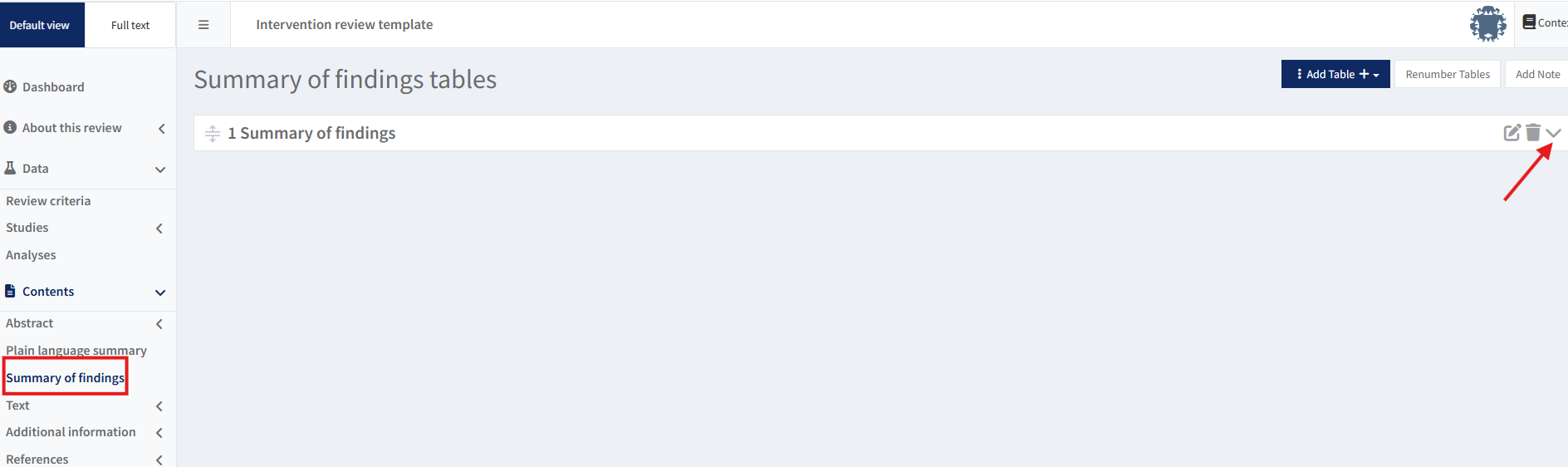
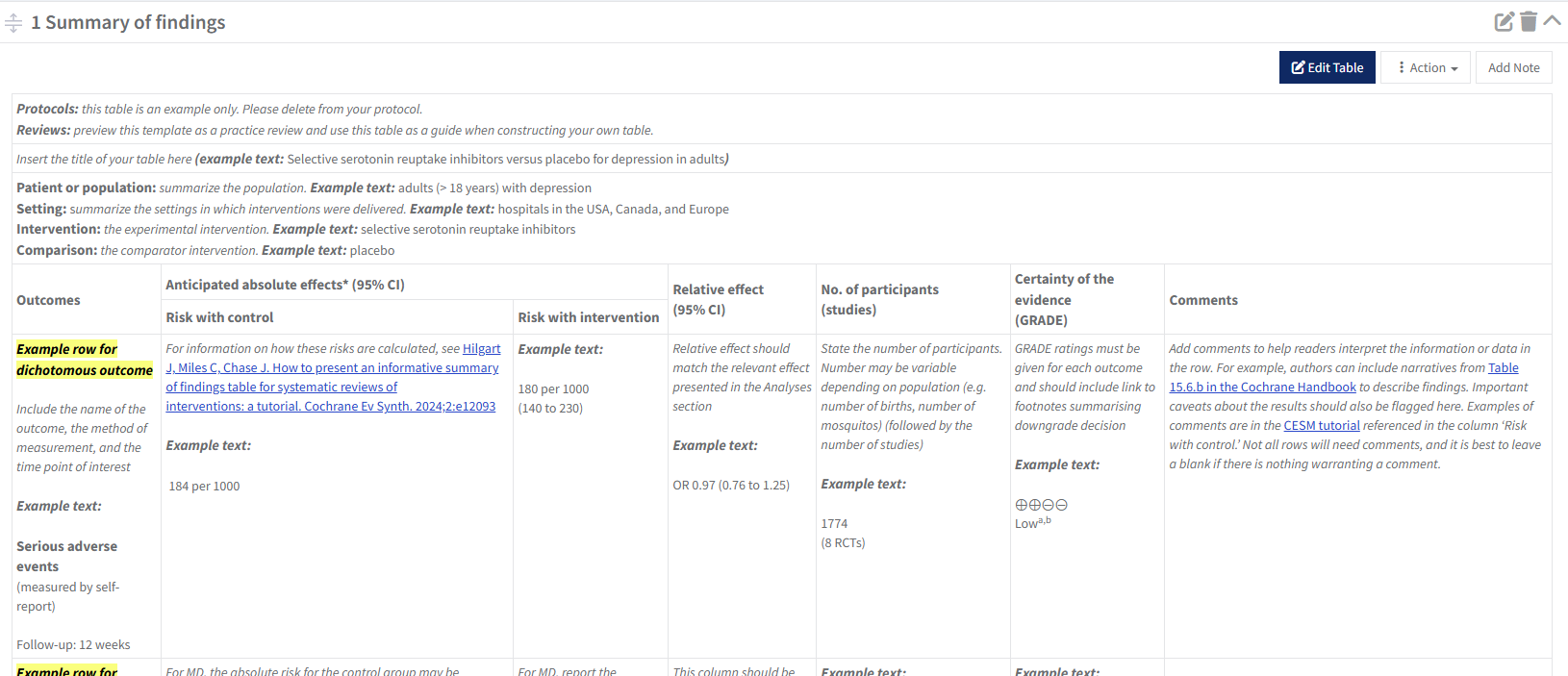
Cochrane's intervention review template contains essential guidance on conducting your review and reporting your findings.The intervention review template is updated periodically to ensure authors have clear and current guidance on best practice for Cochrane reviews. We therefore advise that authors always open the template as a practice review in RevMan to ensure you are always viewing the latest version. For access to, and more details on using, the template, visit the RevMan Knowledge Base. The template has been updated in March 2025 to include guidance for Summary of Findings tables and a clarification in the 'Results > synthesis of results' section for creating Figures.
|
|
|
|
|
4. Launch of new Methods Group focusing on artificial intelligence (AI) and automation in evidence synthesis
|
|
|
Cochrane are pleased to announce the launch of a new Methods Group focusing on artificial intelligence (AI) and automation in evidence synthesis.
The group is jointly run between the Cochrane Collaboration, the Campbell Collaboration, JBI and the Collaboration for Environmental Evidence (CEE), and will help define and support responsible AI use across these four leading evidence synthesis organizations. The group will aim to spearhead methods research and development and act as a bridge between evidence synthesis organizations and the wider research community, define best practice and ensure guidance for accepted methods is up to date, and support the implementation of new or amended methods by acting as an advisor or through involvement in methods implementation in our respective evidence synthesis organizations. Want to know more? Join our webinar on 3rd June on ‘Recommendations and guidance on responsible AI in evidence synthesis’ , part of the Artificial Intelligence (AI) methods in evidence synthesis series. Or visit our AI Methods Group website.
|
|
|
|
|
5. Three optional tools endorsed for Cochrane Qualitative Evidence Synthesis
|
|
|
In February, Cochrane endorsed three optional tools for prospective authors of Cochrane Qualitative Evidence Syntheses (QES): CochrAne qualitative Methodological LimitatiOns Tool (CAMELOT), the data richness and thickness assessment tool, and the interactive Summary of Qualitative Findings tool (iSoQ). Development teams for CAMELOT and the data and richness and thickness assessment tool included convenors from the Cochrane Qualitative and Implementation Methods Group.To learn more about the tools and see resources for authors and editors tools visit the Methods in Cochrane page.
|
|
|
|
|
6. Cochrane Learning Live webinar series: Statistical analysis in systematic reviews
|
|
|
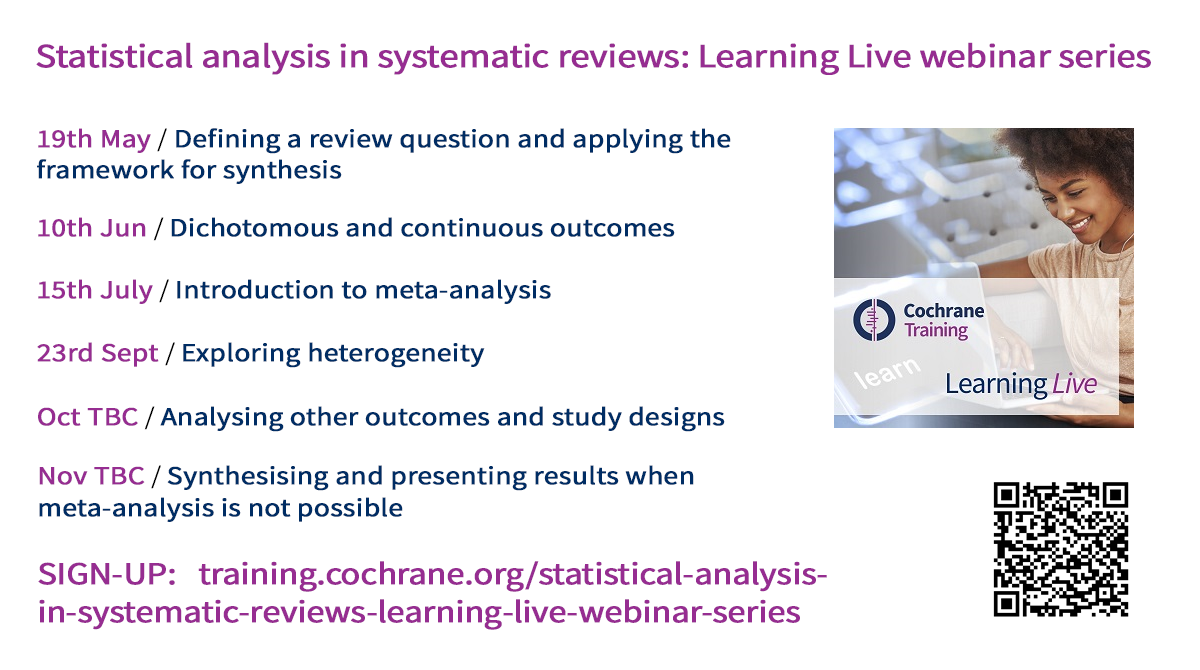
Join the free Cochrane Learning Live webinar series: Statistical analysis in systematic reviews. This new series of monthly webinars will explore the basics of statistical analysis in systematic reviews. It's primarily aimed at Cochrane authors and trainers from low-and middle-income countries (LMICs), although anyone interested in this topic is welcome to attend.The series was developed in collaboration with the Cochrane Statistical Methods Group. We're pleased to be joined by leading experts throughout the series. You can find out more about each session and register here.
|
|
|
|
|
7. Latest articles in Methods and Statistics Tutorials series
|
|
|
|
|
|
The next two MSU web clinics are open for sign-up. Don’t forget - if you sign-up, you will automatically be sent a recording of the session afterwards
Living systematic reviews: the what, why, when and how. Tuesday 1st April 2025 9am UTC Sign up here Tips for avoiding common errors in protocols for Cochrane systematic reviews. Thursday 15th May 2025 8am UTC Sign up here
|
|
|
|
|
9. Reminder: New decision framework for updating of Cochrane reviews - live from April 1st 2025
|
|
|
Cochrane has released a new framework to help editors and authors decide when to update a Cochrane review. The framework does not represent a change of policy, but offers practical guidance on how to best implement our existing policies and principles. Read the news item to find out more.
|
|
|
|
|
|
Struggling with your data extraction process? Let the Covidence Team help! We're offering free 30-minute sessions with an experienced systematic reviewer at Covidence. Whether you need to fine-tune your data extraction template, troubleshoot challenges, or streamline your workflow, our experts are here to guide you. Don't miss this chance to enhance your systematic review process. Book your session today!
|
|
|
|
|
11. Top tips for Cochrane Authors
|
|
|
|
|
|
RevMan now supports dynamic analysis results reporting. This means that if you change the statistical setup or add or remove studies from an analysis, RevMan would automatically update reporting of the relevant analysis results throughout the whole review. For more information, see the RevMan Knowledge Base.
|
|
|
|
|
|
|