|
Welcome to the Author Digest, September 2025 We hope you find it helpful. This digest goes out to all active Cochrane authors and will continue to be sent to authors who are opted in. Please review your communication preferences in your Cochrane Account and ensure you are opted in to communications.
|
|
|
|
|
|
Contents Tool for Addressing Conflicts of Interest in Trials (TACIT)
CESM Call for Papers: Collaborative Evidence Synthesis
Updates to subheadings for diverse Cochrane reviews coming in mid-November
Changes coming to how Cochrane manages rapid reviews
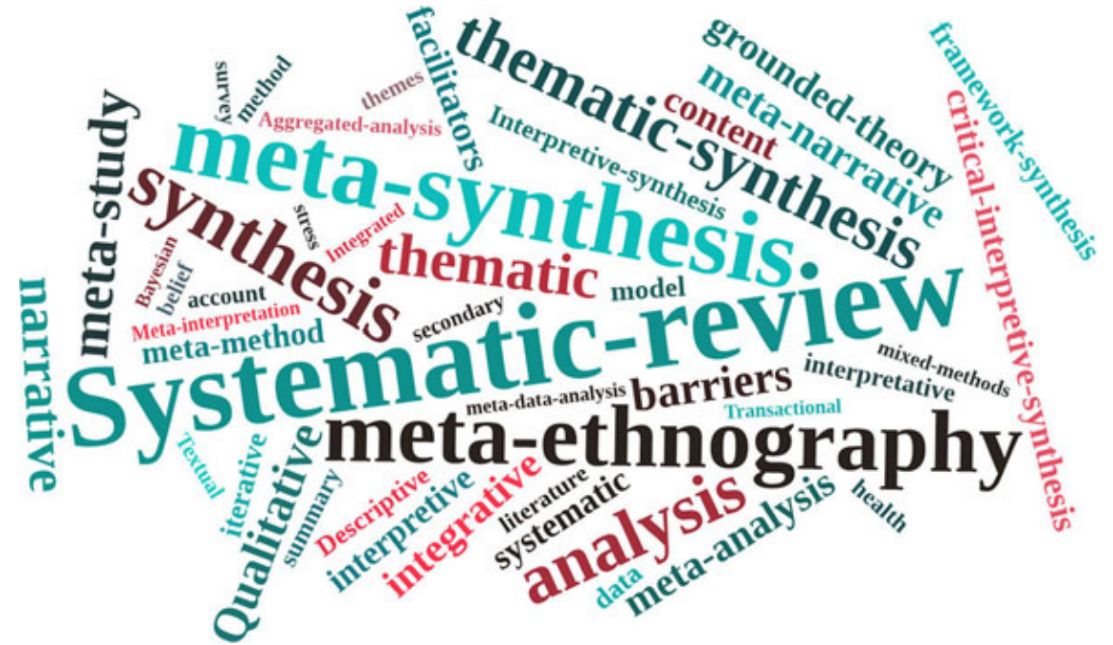
Your chance to contribute to a new global reporting guideline for qualitative evidence syntheses!
Updates from Cochrane's editorial team
Upcoming Methods Support Unit web clinics
Improvements to automatic analyses workflow – it’s time to get on board
Reminder of the upcoming retirement our 2014 Commercial Sponsorship policy for Cochrane Library content
Covidence
Top tips |
|
|
|
|
1. Tool for Addressing Conflicts of Interest in Trials (TACIT)
|
|
|
An unpublished version of TACIT is now available on the Open Science Framework. This link gives access to the TACIT Grid and guidance document. An Excel-based version of the tool will be added shortly. The developers of the tool welcome feedback on this version which will be used to develop the final version.
|
|
|
|
|
2. CESM Call for Papers: Collaborative Evidence Synthesis
|
|
|
Cochrane Evidence Synthesis and Methods invites submissions for a special issue on collaborative approaches to evidence synthesis, including individual participant data (IPD) meta-analysis, prospective meta-analysis (PMA), and emerging methods. This issue will highlight innovations that improve transparency, precision, and policy relevance in evidence generation. We welcome methodological papers, case studies, and meta-research. The Guest Editors are Prof. Anna Lene Seidler & Dr. Peter Godolphin. The Submission deadline is Sunday, 1 March 2026. More details on CESM.
|
|
|
|
|
3. Updates to subheadings for diverse Cochrane reviews coming in mid-November
|
|
|
Cochrane’s 2025-2030 scientific strategy highlights the need for diverse evidence synthesis methods to address key research priorities. To support authors developing and reporting systematic reviews of studies that aren’t interventions, Cochrane will be introducing new review subheadings for the following review types: diagnostic test accuracy , methodology, overview, prognosis, and qualitative evidence synthesis. The new subheadings have been developed with the relevant Methods Groups and will align with the focused review format to improve consistent reporting for all types of Cochrane reviews. Additionally, based on your feedback on the recent changes, there will be minor updates to subheadings in the intervention review template. The new subheadings will be available on 15 November, coinciding with the annual Central Editorial Service submission cut-off date. For the timeline and further details of these upcoming changes, please visit this page.
|
|
|
|
|
4. Changes coming to how Cochrane manages rapid reviews
|
|
|
Cochrane rapid reviews are a type of evidence synthesis that accelerates the traditional systematic review process by simplifying or omitting certain steps to produce evidence in a systematic and resource-efficient manner. To make reporting of rapid reviews clearer and more consistent with other reviews in the Cochrane Library, Cochrane is changing the way rapid reviews are managed across systems which will improve the experience for authors, readers, and editors. We’ll be aligning the format authors use to report rapid reviews in RevMan with the type of review question being asked (e.g., intervention rapid review, prognosis rapid review). These changes will affect the proposal and review development phases for rapid reviews and will be launched on 15 November, coinciding with the annual Central Editorial Service submission cut-off dates. For the timeline and further details of these upcoming changes, please visit this page.
|
|
|
|
|
5. Your chance to contribute to a new global reporting guideline for qualitative evidence syntheses!
|
|
|
A global study is seeking people who conduct, commission or use qualitative evidence syntheses. Funded by the United Kingdom’s Medical Research Council, a team of researchers is leading development of a new guideline to improve the reporting quality of qualitative evidence syntheses (PRISMA QES). We are looking for people to take part in a Delphi study to agree the guideline content. We need people who have expertise in the use of qualitative evidence to inform practice and policy for health and social care, social work or education or global challenges. You might be an academic expert or another professional who undertakes and/or uses evidence from QESs to underpin decision-making such as a commissioner of QES, or a member of the public. If you are interested in taking part or would like more information, please contact Emma France, one of the convenors of Cochrane's Qualitative and Implementation Methods Group.
|
|
|
|
|
6. Updates from Cochrane's editorial team
|
|
|
As we head into the final stretch of 2025, the Central Editorial Service (CES) team would like to share a few key milestones from the year so far: - Faster editorial decisions: we've reduced the time to first editorial decision by over two months between Q4 2024 and Q2 2025.
- Higher protocol acceptance rates: up 38%, now at 79%.
- Increased output: we've made 337 final editorial decisions by the end of August, 42 more than at the same point last year.
- Smarter workflows: continued process improvement and a better alignment of workload and capacity have helped us improve turnaround times while maintaining steady submission levels.
- Growing submission pipeline: we’re expecting over 100 more reviews and protocols than this time last year.
We’ve also said goodbye to two valued members of our leadership team: - Liz Bickerdike, Executive Editor, left Cochrane in July.
- Colleen Ovelman, Head of Editorial, left Cochrane earlier this month.
We’re incredibly grateful for their contributions and wish them all the best in their next chapters. Interim arrangements are in place to ensure smooth operations and fair workload distribution.
We’re also pleased to announce the appointment of a new Head of Editorial: Tony Aburrow, currently Cochrane’s Editorial Policy Manager, will be transitioning into the CES team in late October. His extensive publishing experience and deep understanding of Cochrane’s editorial standards will be invaluable as we move forward. Looking ahead, CES will begin sharing quarterly updates to keep you informed. In Q4, we will share year-end highlights.
|
|
|
|
|
7. Methods Support Unit web clinic
|
|
|
The next two Methods Support Unit web clinics are open for sign-up. The October clinic will feature a presentation on Version 2 of the ROBINS-I tool to assess risk of bias in non-randomised studies of interventions. The November clinic focuses on Individual Participant Data (IPD) in meta-analysis. Don’t forget - if you sign-up, you will automatically be sent a recording of the session afterwards. Version 2 of the ROBINS-I tool. Thursday 2nd October 8am UTC (check in your time zone)
Individual Participant Data (IPD) meta-analysis: an overview. Thursday 27th November 9am UTC (check in your time zone)
|
|
|
|
|
8. Improvement to automatic analyses workflow - it's time to get on board
|
|
|
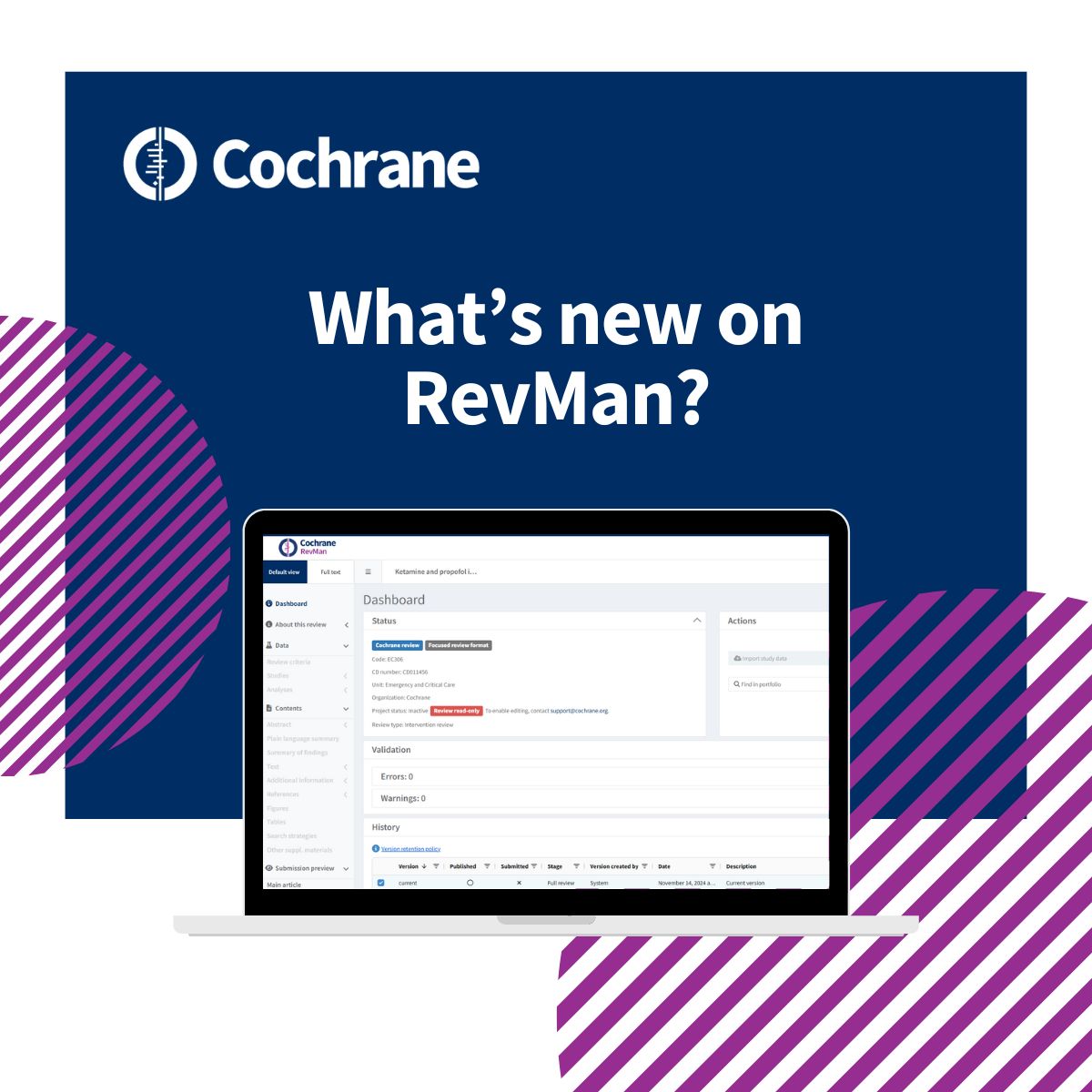
Following recent improvements, with automatic analyses in RevMan: - You can re-order interventions, covariates and outcomes to help you organize review criteria the way you like and to allow you to define the order in which subgroups are presented.
- You can enter number of total participants for contrast results and footnotes for each result.
- If you set the direction of your outcomes, RevMan can automatically set your graph labels, so you don’t need to do this manually.
- The study data import is more robust with better error handling and helps you add interventions, outcomes and covariates as part of the import workflow.
Using automatic analyses has clear benefits for most reviews: - RevMan will help you with calculations you previously had to do manually or using the calculator. The result of this is that you have better provenance of your data and you can more easily re-use data without risking transcription errors.
- You can import all your study data instead of manually pasting for each analysis. Tip: Covidence has an export in the RevMan format so if you extract your data using their data extraction version 1, the transfer will just require a few clicks.
Learn more
|
|
|
|
|
9. Reminder of the upcoming retirement of our 2014 Commercial Sponsorship policy for Cochrane Library content
|
|
|
|
|
10. Covidence: New to evidence synthesis?
|
|
|
Join our webinar to explore the most common review types, systematic, scoping, rapid, umbrella, narrative, and more. Discover when to use each, how to choose the right one for your research, and get practical tips to plan your review with confidence. Can’t make it live? Register anyway, We’ll send you the recording within 24 hours.
|
|
|
|
|
11. Top tips for Cochrane Authors
|
|
|
|
|
|
Are you new to Cochrane and to using RevMan? The RevMan Knowledge Base is your main resource and a one-stop shop for all of your queries about how to use our review-writing software!
|
|
|
|
|
|
|
|
|