|
Welcome to the December 2023 edition of the Cochrane Consumer Network digest, the newsletter for the 3,000 subscribers to the news digest, and our growing, global community of patients, carers and the public, who are interested in health evidence, Cochrane evidence, and helping to produce it.
|
|
Climate change is a health issue
|
|
|
As COP28 negotiations continue this month, Cochrane has joined health professionals, groups, and individuals across the world to call for leaders to meet the commitments they have already made, and to raise their ambition for a healthier, fairer and greener future by: 1 – delivering on the Paris Agreement and accelerate the phase out of fossil fuels to safeguard a liveable future for humanity and save a million lives a year from air pollution; 2 – building climate-resilient, low-carbon health systems as “no regrets” protection for current and future lives; and 3 – delivering on promises of US$ 100 billion a year in climate finance, and spend this on saving lives and improving the health of the most vulnerable. You can also show your support for climate action by adding your voice to the list of signatures. Read more and sign the statement here.
|
|
The Cochrane Climate-Health Working Group
|
|
|
The Cochrane Climate-Health Working Group is a group of people from many different parts of Cochrane, as well as other organizations. As a leader in the field of evidence synthesis, Cochrane is in a position to lead on methodological considerations for reviews within this topic, as well as to publish quality reviews in this area. How can Cochrane members draw on our expertise and commitment to producing relevant and rigorous reviews in order to address the health impacts of climate change? The group members believe there are opportunities for authors, Cochrane groups and others connected with Cochrane to contribute, including consumers. You can read more about its work here.
|
|
Protecting human health in a time of climate change: how Cochrane should respond
|
|
|
It's timely to revisit the editorial published in March 2022. Researchers and methodologists have an important contribution to make to the response to climate change, by producing and synthesizing evidence relevant to climate-health impacts. While Cochrane has identified climate change as a key issue in its strategic plans, this editorial explores how to translate that high-level awareness into action and what work is needed. Read more and listen to the webinar from Denise Thompson here.
Richard Morley, Cochrane Consumer Engagement Officer
|
|
In this edition- Cranberries for preventing urinary tract infections
- Cognitive stimulation for people with dementia: making a difference
- Podcast: Antioxidant, vitamin, and mineral supplements for slowing the progression of age‐related macular degeneration
- Stakeholder involvement in a Cochrane review of physical rehabilitation after stroke: Description and reflections
- Podcast: Antioxidants for adults with chronic kidney disease
- Antibiotics for acute middle ear infection in children
- Podcast. Cognitive behavioural interventions for reducing fear of falling in older people living in the community
- Grommets for otitis media with glue ear in children
- Cochrane Lifetime and Emeritus Memberships
- International Volunteer Day: messages of thanks to all Cochrane volunteers
- Help shape Cochrane evidence - join Engage
|
|
The latest evidence from Cochrane and other trusted sources
|
|
|
Below is a selection of recent evidence. You can find Cochrane evidence at the Cochrane Library here, and freely accessible, plain language summaries of Cochrane evidence here.
|
|
Cranberries for preventing urinary tract infections
|
|
|
|
|
|
Did you know we update our Cochrane reviews with new evidence? This review on 'cranberries for preventing urinary tract infections' was first published in 1998. 25 years on, this is now the 6th update of the original! This update adds a further 26 studies, taking the total number of studies to 50 with 8857 participants. The available evidence supports the use of cranberry products (either in juice or as tablets or powder) to reduce the risk of symptomatic, culture‐verified UTIs in women with recurrent UTIs, in children, and in people susceptible to UTIs following intervention. The evidence currently available does not support its use in the elderly, patients with bladder emptying problems, or pregnant women. Read the full Review and Plain Language Summary in the Cochrane Library here You can also listen to the lead author explain the evidence base in a Cochrane Podcast here or just search for 'Cochrane Library' in Spotify or Apple Podcasts.
|
|
|
|
|
Cognitive stimulation for people with dementia: making a difference
|
|
|
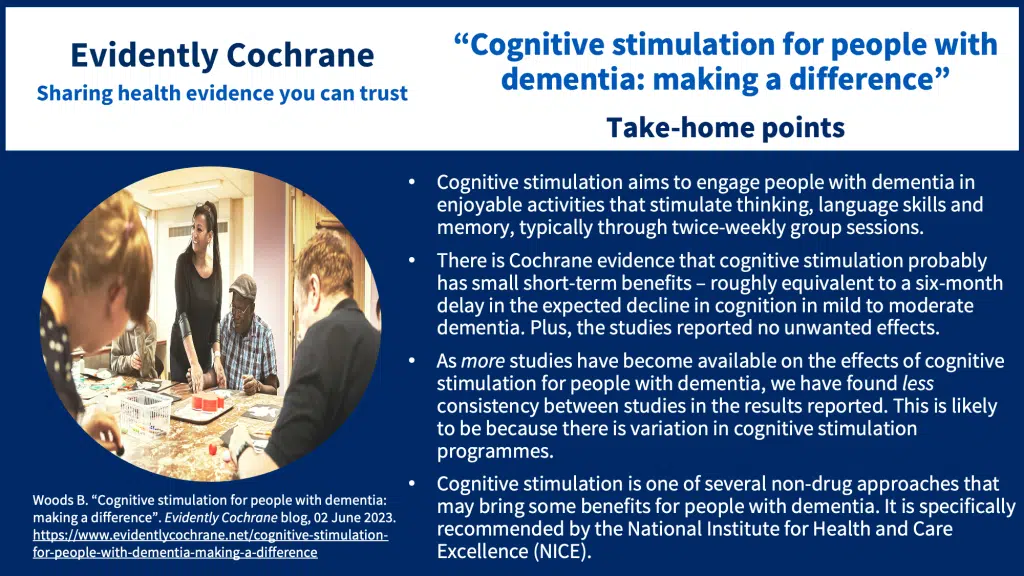
Cognitive stimulation is a structured approach that aims to engage people with dementia in enjoyable activities that generally stimulate areas of cognition such as thinking, language skills, concentration and memory. In this blog, retired clinical psychologist and dementia care researcher, Bob Woods, explains how it might help people living with dementia. Read more here.
|
|
Podcast: Antioxidant vitamin and mineral supplements for slowing the progression of age‐related macular degeneration
|
|
|
Age-related macular degeneration is a progressive and sight-threatening disease affecting the central area of the retina at the back of the eye. There are Cochrane Reviews of the use of antioxidant vitamin and mineral supplements to prevent or slow down progression of the disease and the latter was updated in September 2023. Lead author, Jenny Evans from the London School of Hygiene and Tropical Medicine in the UK tells us about the latest evidence. You can listen to the podcast here. You can also read the full review on the Cochrane Library here.
|
|
Stakeholder involvement in a Cochrane review of physical rehabilitation after stroke: Description and reflections
|
|
|
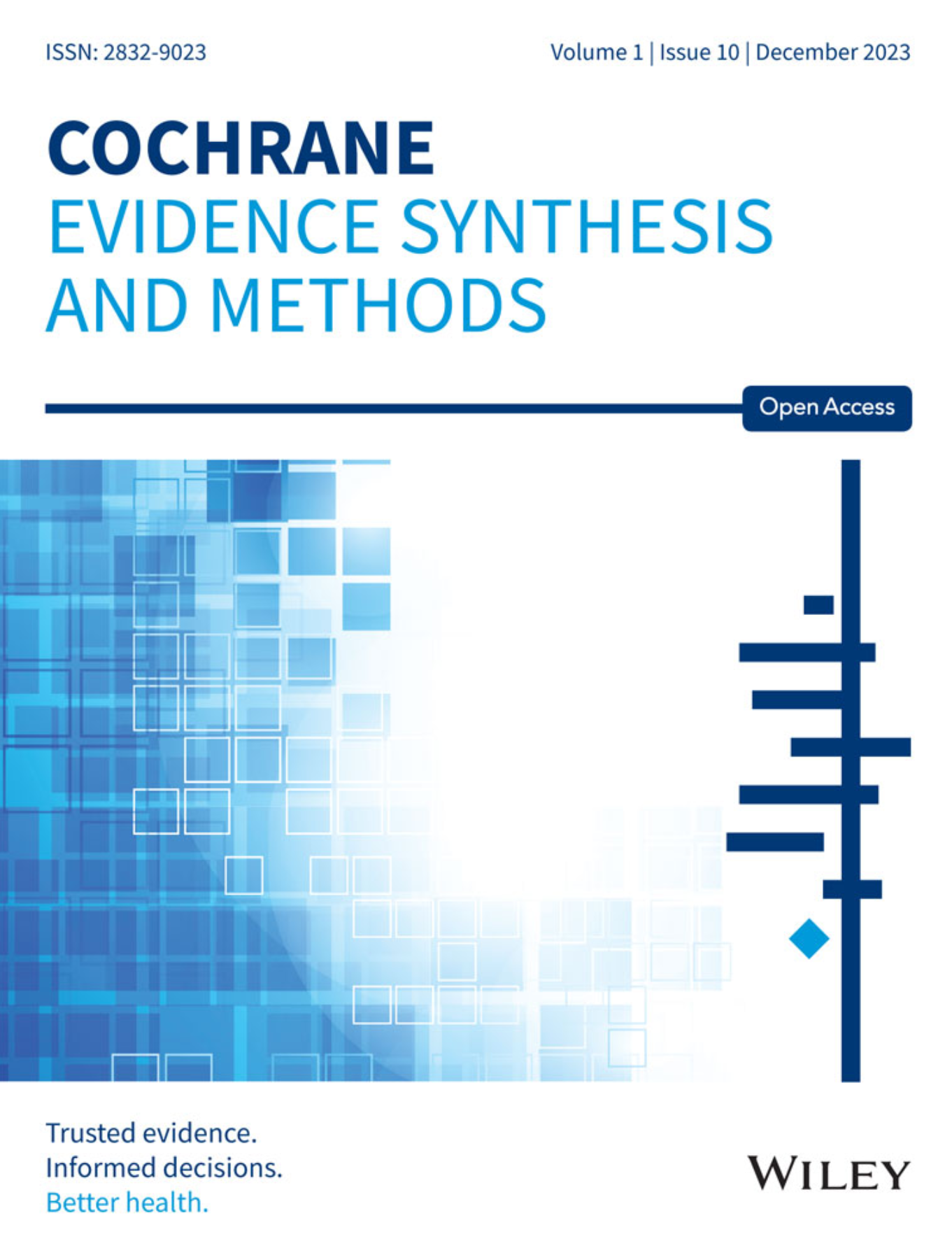
Research reviews bring together evidence from lots of research studies about treatments. The results from research reviews can be very useful to clinicians, patients, and carers. In the past, only researchers worked on these reviews. It is believed to be better when researchers and different stakeholders—like patients, carers, and clinicians—work together to decide how to bring together the information in reviews. Unfortunately, there is still uncertainty about the best way for stakeholders and researchers to work together. In this paper, the authors describe how a team of stroke survivors, carers, clinicians, and researchers worked together on a research review about physical rehabilitation after stroke. The authors found that researchers and stakeholders can work well together, and that stakeholders' views helped to change and improve the way the research information was brought together. This meant the evidence brought together in the research report was more relevant to stroke survivors, carers, and physiotherapists, and therefore is more likely to improve stroke rehabilitation. This paper shares reflections on what went well and what could be done better in future to improve research reviews. Read the paper in the new Cochrane journal Cochrane Evidence Synthesis and Methods here.
|
|
Podcast: Antioxidants for adults with chronic kidney disease
|
|
|
There are several Cochrane Reviews of the effects of a class of drugs called antioxidants, covering a wide range of health conditions. One of these, focused on adults with chronic kidney disease, was updated in November 2023. In this podcast, Julia Colombijn, talks with fellow author, Robin Vernooij, both from the University Medical Center Utrecht in the Netherlands, about the topic and the findings of the review. You can listen to the podcast here.
|
|
Antibiotics for acute middle ear infection in children
|
|
|
In high‐income countries, most children with acute otitis media recover spontaneously without complications. Antibiotics have only a slight effect on pain in the days following but 1/14 children treated with antibiotics experience an adverse event (e.g. vomiting, diarrhoea, or rash). For most children with mild disease in high‐income countries, an expectant observational approach seems justified. Read the full review here.
|
|
Podcast. Cognitive behavioural interventions for reducing fear of falling in older people living in the community
|
|
|
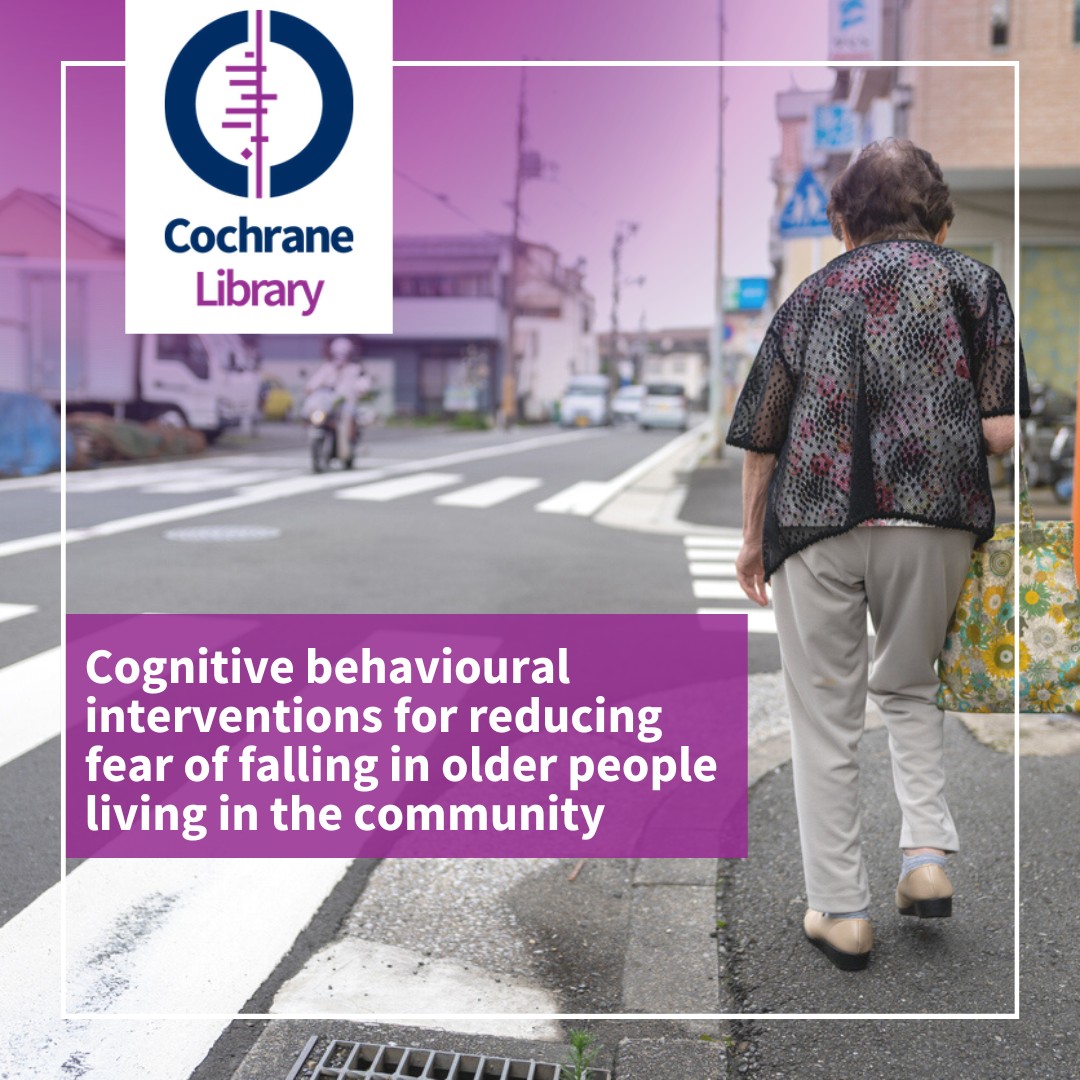
Cognitive behavioural therapy probably reduces fear of falling in older people living in the community. Improvements may be sustained during the first six months after treatment finished, and probably last beyond six months. As a consequence of these interventions, people may be less likely to avoid activities after treatment and their level of depression may be reduced. It is unclear if the frequency of falls is reduced following treatment. Read about the evidence and listen to the podcast here.
|
|
Grommets for otitis media with glue ear in children
|
|
|
Ventilation tubes may slightly reduce the number of children who have glue ear after three to six months of follow‐up. It is not clear whether they also have an effect over longer periods of time. Insertion of ventilation tubes can lead to a persistent hole in the eardrum (tympanic membrane perforation), ranging from 0% to 12% in the studies that were assessed. Read the full review here.
|
|
Cochrane Lifetime and Emeritus Memberships
|
|
|
Cochrane is proud to recognize the extraordinary contributions of individuals who make an exceptional, long-standing contribution to Cochrane’s work and leadership with lifetime and emeritus membership. Cochrane's strength is in its collaborative, global community. Our 100,000+ members and supporters from more than 130 countries work together to produce credible, accessible health information and help inform health decision making. Though we are spread out across the globe, our shared passion for health evidence unites us. Know a dedicated Cochrane colleague who has demonstrated exceptional commitment but is now reducing or concluding their active involvement? We invite you to nominate them for the 2024 recognition. Find the full criteria and the nomination form at the bottom of this membership page here.
|
|
International Volunteer Day: messages of thanks to all Cochrane volunteers
|
|
|
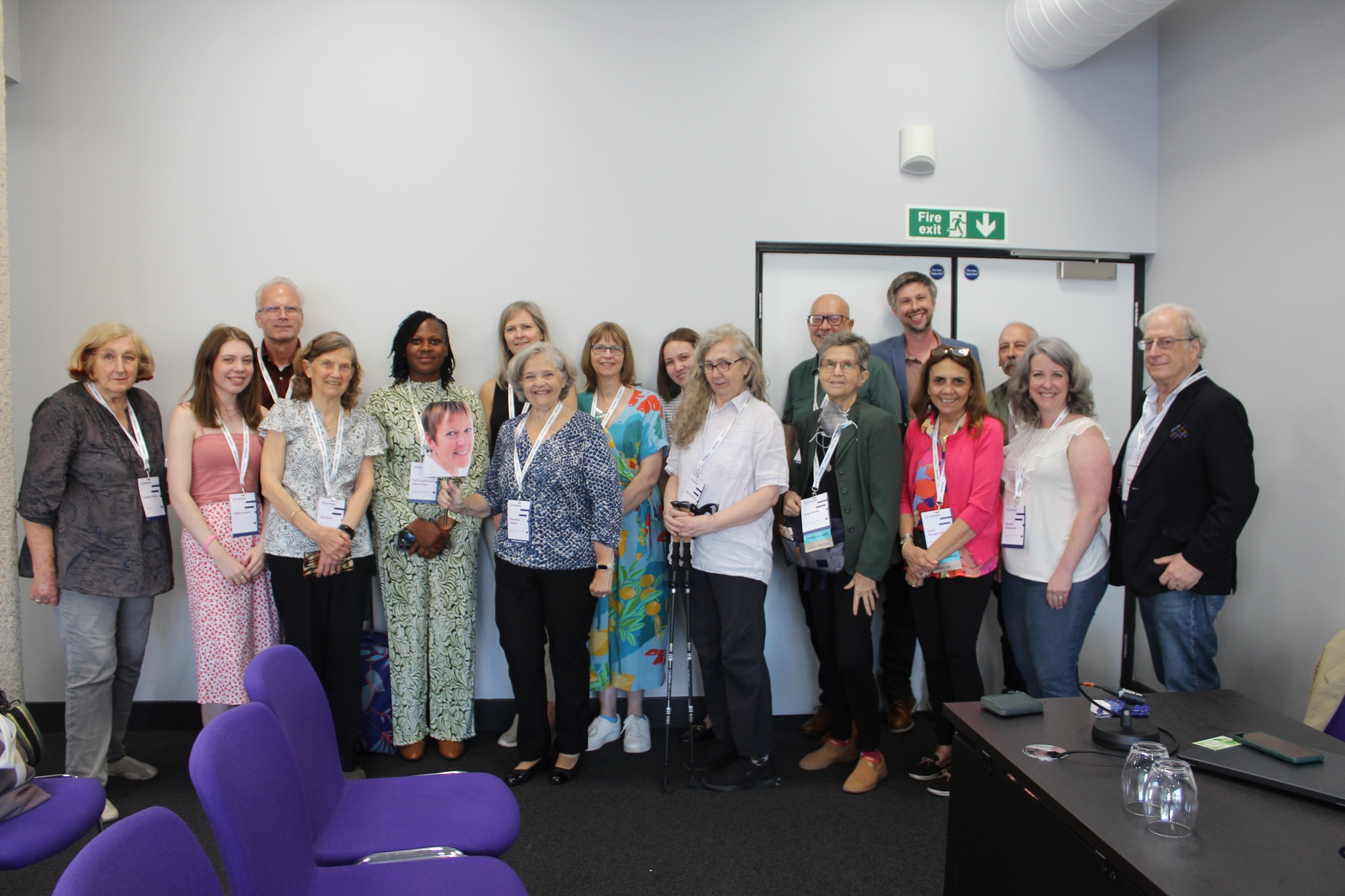
On International Volunteer Day, 5 December, we would like to take the opportunity to say thank you to our incredible global community. Thank you to thousands of Cochrane Supporters and Members who volunteer in so many ways to help bring trusted health evidence to the people who need it, all over the world. You can read messages of thanks from Catherine Spencer, Cochrane CEO, Maureen Smith, Chair of the Cochrane Consumer Network, and others here.
|
|
|
|
|
Help shape Cochrane evidence - join Engage
|
|
|
Cochrane values the input of healthcare consumers - patients, carers and the public - in producing its evidence, from being part of a review author team, on an advisory group, or as a peer reviewer. Are you curious about being involved? Visit https://engage.cochrane.org/, browse "consumer tasks", sign up, create your profile, set up your alerts and dive right in!
|
|
|
|
|
|
|